
UAE Offshore Companies: Comparing the Various Offshore Free Zones
- Dec 10, 2025
- 7 min read
Updated: Dec 28, 2025

The UAE offers three distinct offshore jurisdictions, each designed for international business, asset protection, and real estate investment. Unlike free zone or mainland companies, offshore entities operate outside UAE borders while benefiting from the country's financial infrastructure, banking access, and reputation. For investors seeking a holding structure, real estate vehicle, or international trading entity, choosing the right offshore jurisdiction can affect costs, property rights, and ongoing compliance obligations.
Ras Al Khaimah International Corporate Centre (RAKICC), Jebel Ali Fee Zone Authority (JAFZA), and Ajman Free Zone Authority represent the three primary options available to foreign investors. JAFZA, established in 1983, pioneered offshore company formation in Dubai and remains the only offshore jurisdiction with longstanding Dubai Land Department recognition for property ownership. RAKICC, formed through the 2015 merger of RAK Offshore and RAK International Companies, has rapidly grown to become an effective alternative with Dubai property rights added in 2019. Ajman Free Zone provides an effective option for straightforward international structures, well positioned in the rapidly growing free zone in Ajman.
This guide examines the practical differences across all three jurisdictions: formation requirements, property ownership capabilities, director structures, corporate tax implications, and typical use cases. We'll help you identify which offshore structure aligns with your investment objectives.
What Is a UAE Offshore Company?

A UAE offshore company is a legal entity registered in the Emirates but structured exclusively for international operations. These entities cannot conduct business within the UAE mainland, rent physical office space, or employ staff locally. Instead, they serve specific purposes: holding assets, owning real estate in designated freehold areas, managing intellectual property, facilitating international trade, or acting as parent companies for UAE subsidiaries.
Unlike free zone companies that operate within UAE territory, offshore entities receive a Certificate of Incorporation rather than a trade license. This distinction matters for banking, as some UAE banks treat offshore accounts with additional scrutiny. However, all three offshore jurisdictions allow company formation with 100% foreign ownership, no minimum capital requirements, and no mandatory audit obligations. The shareholder registry remains confidential, with names not appearing on public records.
All offshore companies must now register for UAE corporate tax, though most qualify for the 0% rate if they meet Free Zone Person criteria and conduct qualifying activities outside the UAE. Since 2019, Economic Substance Regulations require offshore companies to file annual notifications, even if minimal substance is maintained.
RAKICC: Integrated in the UAE and Abroad

Ras Al Khaimah International Corporate Centre emerged from Emiri Decree No. 12 of 2015, consolidating two earlier registries into a single, modern corporate centre. Located in Ras Al Khaimah, approximately 45 minutes from Dubai, RAKICC has built a reputation for efficient incorporation and competitive pricing. The jurisdiction appears on the EU's ECOFIN whitelist, an important consideration for investors with European ties.
Structure and Requirements
RAKICC requires minimum one shareholder and one director, both of which can be the same individual. Corporate shareholders and directors are permitted, though all beneficial ownership must be disclosed to the registry. A company secretary appointment is mandatory. Companies must engage a registered agent for formation and ongoing compliance, as direct registration with the authority is not available.
RAKICC offers several company structures: International Business Company limited by shares (the most common), companies limited by guarantee, protected cell companies, and unlimited liability companies. The Premium Product allows a RAKICC offshore company to own 100% of a RAKEZ free zone subsidiary, enabling UAE operational activity while maintaining offshore benefits at the parent level.
Property Ownership in Dubai
Following the July 2019 MoU between RAKICC and the Dubai Land Department, RAKICC companies can own freehold property in designated Dubai areas. The process requires a No Objection Certificate from RAKICC, proof that all shareholders are individuals, and standard DLD documentation including the original title deed and developer NOC. This development has made RAKICC a viable alternative to JAFZA for real estate investors seeking lower incorporation and renewal costs.
Key Advantages
RAKICC's primary appeal lies in its efficiency and cost-effectiveness. Incorporation typically completes within one to two working days once documents are submitted. The jurisdiction offers access to DIFC and ADGM common law courts, providing English-language proceedings and familiar legal frameworks for international investors. There is no minimum capital requirement, no mandatory audit, and accounting records must be maintained for five years but need not be publicly filed.
JAFZA Offshore: The Established Choice

Jebel Ali Free Zone Authority launched offshore company formation in 2003, making it the UAE's original offshore jurisdiction. Located within one of the world's largest free trade zones and connected to Jebel Ali Port, JAFZA carries significant reputational weight in international business circles. For investors prioritizing track record and Dubai-centric operations, JAFZA remains the default option despite higher costs.
Structure and Requirements
JAFZA offshore companies require minimum one shareholder but two directors. This two-director requirement distinguishes JAFZA from other UAE offshore options. Corporate directors are not permitted - all directors must be natural persons. Formation requires appointment of a registered agent, personal presence in Dubai for document signing (or a power of attorney if remote), and submission of passport copies, proof of residence, bank reference letters, and shareholder CVs.
Business activities are not restricted to specific categories, allowing broad operational flexibility. However, like all offshore entities, JAFZA companies cannot conduct business within UAE territory. The 2018 JAFZA Offshore Companies Regulations clarified property ownership rights and updated compliance requirements.
Property Ownership
JAFZA has held Dubai Land Department recognition for property ownership since 2011, when other offshore jurisdictions lost this capability. This long-established relationship means JAFZA companies face no additional approvals when purchasing property in Dubai's freehold areas. For high-value real estate transactions or portfolio property investments, this streamlined process can outweigh the higher formation costs.
Key Advantages
Beyond property rights, JAFZA offers the prestige of Dubai's premier free zone and direct association with Jebel Ali Port infrastructure. Banks often view JAFZA offshore companies more favorably than other offshore jurisdictions, potentially simplifying account opening. The jurisdiction's established compliance framework provides certainty for long-term holding structures. Formation takes one to two weeks, longer than RAKICC but still efficient by international standards.
Ajman Free Zone Offshore: The Rising Star
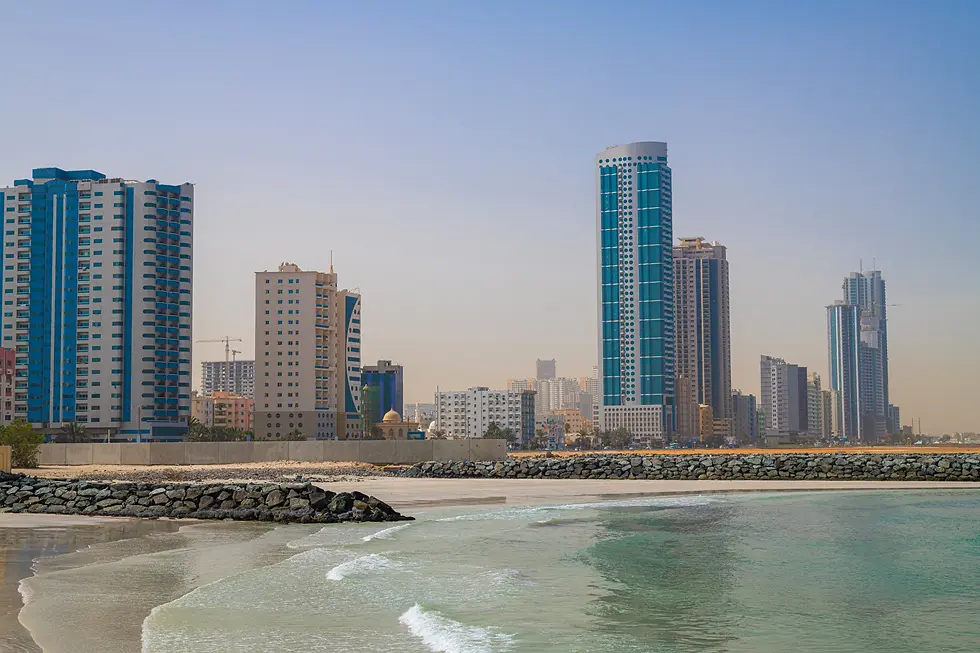
Ajman Free Zone Authority began offering offshore registrations in 2014, positioning itself as the most affordable UAE offshore jurisdiction. Located in the emirate of Ajman with proximity to Dubai and Sharjah, AFZ appeals to investors prioritizing cost over property rights or prestige. The jurisdiction offers incorporation within 24 hours and maintains no public register of shareholders or directors.
Structure and Requirements
Ajman offshore companies require minimum one shareholder and one director, with a maximum of five directors permitted. Only natural persons can serve as directors - corporate directors are not allowed. A UAE-registered agent must handle formation and provide a registered office address. There is no minimum share capital requirement, and a company secretary appointment is mandatory.
Permitted activities include holding companies, general trading, consultancy services, IP management, ship management, and digital marketing. Uniquely among UAE offshore jurisdictions, Ajman permits certain financial activities including advisory, brokerage, and currency exchange. Real estate ownership is limited to properties within Ajman emirate only, with a maximum of three properties per company.
Key Advantages
Ajman's primary advantage is speed. Formation and renewal fees are typically lower than both RAKICC and JAFZA, and incorporation time is faster. The jurisdiction actually offers the fastest incorporation timeframe - as quick as one working day with complete documentation. For investors who need a UAE corporate structure for international consulting, IP holding, or as a parent company for non-UAE subsidiaries, Ajman provides a straightforward, economical solution without the premium associated with Dubai-centric jurisdictions.
Direct Comparison: Choosing Your Ideal Jurisdiction

Property Ownership
JAFZA and RAKICC can both hold freehold property in Dubai. JAFZA's relationship with the Dubai Land Department is longer-established, while RAKICC's 2019 MoU provides equivalent rights at lower cost. Ajman offshore companies cannot own Dubai property - they are limited to Ajman emirate real estate only. For investors whose primary objective is Dubai property holding, JAFZA or RAKICC are the only viable options.
Director Requirements
JAFZA requires two natural person directors, adding complexity for sole investors. RAKICC and Ajman require only one director. RAKICC permits corporate directors alongside natural persons, offering flexibility for corporate groups. Ajman restricts directorships to natural persons only. For investors seeking the simplest structure, RAKICC offers the most flexibility.
Formation Timeline
Ajman offers the fastest incorporation at one working day. RAKICC typically completes within one to two days. JAFZA takes one to two weeks due to more thorough compliance reviews. For time-sensitive transactions, Ajman or RAKICC provide speed advantages.
Corporate Tax Position
All three jurisdictions require corporate tax registration with the Federal Tax Authority. Offshore companies that conduct business exclusively outside the UAE and meet Free Zone Person criteria may qualify for 0% rates. JAFZA has confirmed its free zone status for corporate tax purposes. RAKICC, established as a free zone under Emiri Decree, is positioned similarly though explicit confirmation from authorities is advisable. All offshore entities must file annual tax returns even if no tax is payable.
Banking Considerations
UAE banks apply additional scrutiny to offshore company accounts. JAFZA's established reputation may ease account opening with some institutions. RAKICC companies generally open accounts successfully with proper documentation and minimum balance commitments. Ajman offshore companies may face more challenges, particularly with Dubai-based banks. All offshore accounts typically require higher minimum balances than free zone or mainland equivalents.
Which Offshore Jurisdiction Fits Your Needs?
Choose JAFZA if: Dubai property ownership is your primary objective and you prefer the most established jurisdiction. The higher costs are justified when dealing with significant real estate portfolios, institutional investors requiring maximum credibility, or situations where banking relationships are paramount.
Choose RAKICC if: You want Dubai property rights at lower cost, need flexibility with corporate directors, or prioritize fast incorporation. RAKICC suits investors seeking the benefits of a UAE offshore structure without JAFZA's premium pricing. The Premium Product option adds value if you plan to establish UAE operational subsidiaries.
Choose Ajman if: Setup time is the primary concern, Dubai property ownership is not required, and you need a straightforward structure for international consulting, IP holding, or as a parent company for non-UAE operations. Ajman works well for entrepreneurs who need a UAE corporate address without the complexity of Dubai-focused jurisdictions.
How We Structure UAE Offshore Companies
Our team handles the complete offshore formation process across all three jurisdictions. We assess your investment objectives, property ownership needs, and ongoing compliance requirements to recommend the appropriate structure. We prepare all documentation, liaise with registered agents and authorities, and manage the incorporation timeline from initial application through certificate issuance.
For clients requiring Dubai property ownership, we coordinate with the Dubai Land Department and ensure all No Objection Certificates and supporting documentation are properly prepared. For holding structures involving UAE subsidiaries, we design the complete corporate architecture and handle free zone or mainland company formation as needed.
Contact Gravity Power Management Consultancies to discuss which UAE offshore structure aligns with your investment strategy.
Article Written By:

Martin Kocher,
Investment Structuring Expert
Dubai, United Arab Emirates
Disclaimer: Thank you for reading our article. This content is for informational purposes only and does not constitute legal, tax, or investment advice. Please consult qualified professionals for guidance specific to your situation.


Amazing insights! This guide on UAE offshore companies breaks down the key differences between RAKICC, JAFZA, and Ajman jurisdictions in such a clear, practical way. It’s incredibly useful for anyone planning international expansion, asset holding, or strategic investment. Great work and super informative – thank you! Sidney De Queiroz Pedrosa